Pink and White Tulip Bouquets - via A Lacey Perspective

Planning & Inspiration

Springtime Flowers Feature

For those of us not fortunate enough to live in eternal warmth, spring often signifies the much-welcomed peeling off restrictive layers, heavy woolen wraps and full length casings that double as winter coats. We’ve traded our cumbersome snow gear for the tailored sophistication of a trench coat and kitten heels. We breathe again and our world is filled with the budding optimism of sunlight.

Spring weddings are much like the light that breaks through the dense, grey haze of winter. They are flirty and fresh, bringing the first pops of bright color after the long departed summer hues have faded. They conjure images of lush rolling hills just beginning to sprout with green carpets and cobblestones wet from a light spring rain. Flowers, just like fashion, change for the season, and springtime flowers are some of the most beloved around the world. They are colorful, fun and bring sunshine into your days. Here at Bride and Blossom, we have a few of our favorite flowers that we love to work with during springtime weddings.
Read More

Blue Hydrangea- Haute Hydrangea- photo by Hamptons Hostess

Planning & Inspiration

Flower Feature – Hydrangea

One of the most beautiful and well-known species in the flower kingdom, is hydrangea. Hydrangea originated in many regions of the world, including North and South America, Europe and Asia. Now worldwide, they are very famous and a popular flower grown in gardens, while also being used at special occasions and weddings. Offering a variety of species in the kingdom, it is most famous for its hydrangea and Dutch hydrangea variety. The hydrangea species is famous for its large soft clusters and overwhelming beauty in its natural state. The hydrangea flower is grown on a hydrangea bush in single clusters containing multiple little flowers and blooms. Though each individual flower is very small, hydrangea’s florets are known for coming in full round clusters at the top of a single stem.
Read More

Tulips via Flickr

Planning & Inspiration

Flower Feature: Tulips


Tulips via Flickr

Tulips via Flickr


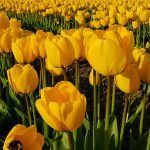
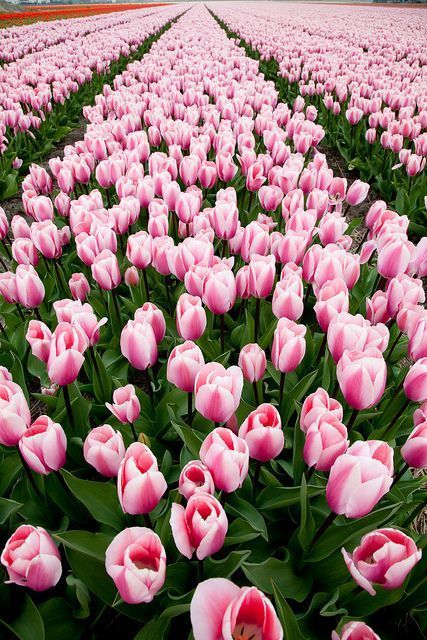
Popular in home gardens worldwide, the tulip is an essential asset to many floral design recipes. Known for its wide range of colors, bright bulbs and symbolic value, the tulip flower is a fan favorite.  In fact, tulips are the 3rd most popular flower in the world.

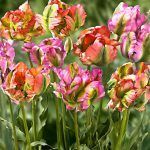
There are over 75 species of tulips, such as the Dutch tulip and parrot tulip.  Tulips are available in a variety of shapes, dimensions and colors, making them extremely versatile.


Tulips were first recorded growing in the Ottoman Empire. The word tulip comes from the Turkish word for turban, due to its tall, round shape. Today, many recognize the tulip as the emblem of Holland. When roaming the streets of the Netherlands, beloved tulips play a significant role in the nation’s cultural traditions and are loved by locals and tourists alike. Tulips were first brought to the Netherlands in the sixteenth century. Flemish botanist Carolus Clusius wrote a book about tulips in 1592 and they suddenly became so popular that his garden was raided and bulbs were stolen regularly! As the years went by, the Dutch became so fanatically obsessed with tulips that bulbs became immensely expensive.  Tulipmania, the name now given for this curious enthusiasm for tulips, peaked in 1637 and is considered the first example of an “economic bubble.”  Buying one tulip bulb at that time would have cost you 10 times the average national income.
Read More

Lavender Flowers via Better Home & Garden

Planning & Inspiration

Flower Feature: Lavender

Lavender Flowers via Gardenia

Lavender Flowers via Gardenia


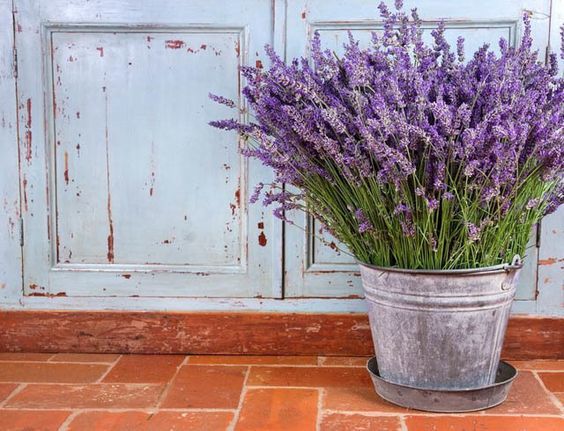
Adored for centuries for their unforgettable color and luminous beauty, the Lavender Flower is easy to recognize and easy to love.  Not only is lavender beautiful, its  also used worldwide for its medicinal properties and calming fragrance. Symbolically, lavender has traditionally been used in weddings to represent love, devotion, and tranquility.

The word lavdnder is believed to come from the Latin term lividus, which implies association with the French word lavande meaning “to wash,” as lavender was often used to bathe and wash clothing.


The color of lavender is spiritually symbolic, as purple represents the crown chakra ,  the highest vibration in the spiritual body. It is said that by increasing our body’s vibrations, we can relieve pain, and hasten recovery Lavender is commonly used in aromatherapy and has been known to help heal minor injuries, headaches, cuts, and burns. Placing lavender under your pillow at night has been known to help with stress and insomnia.
Read More

Dahlia at Lalbagh Flower Show via Wikipedia

Planning & Inspiration

Flower Feature: Dahlias

Purple Dahlia Bouquet via Deer Pearl Flowers

Purple Dahlia Bouquet via Deer Pearl Flowers


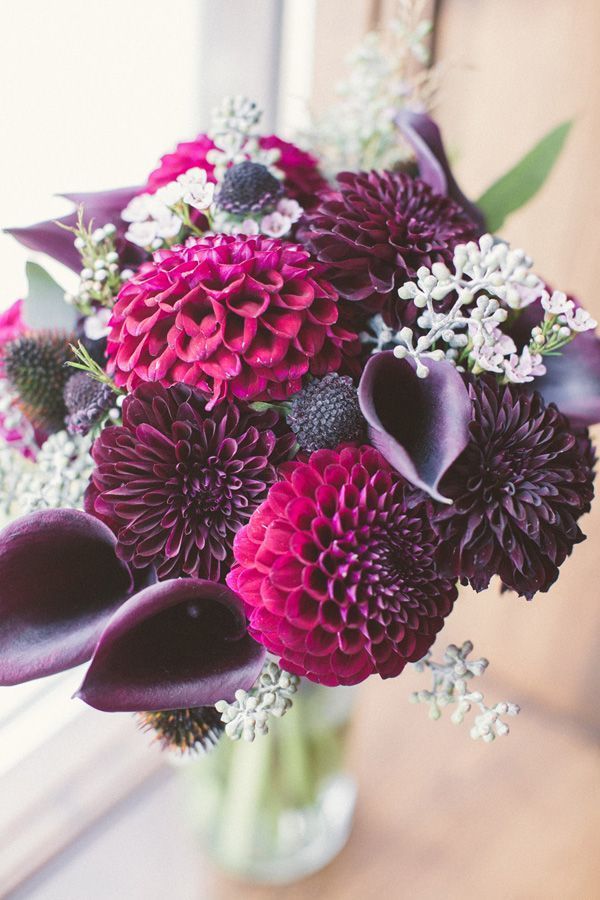
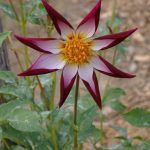
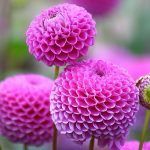
Full-bodied and bright, dahlias are all about the drama. While you may think  you’ve seen one dahlia, you’ve seen them all, the term ‘dahlia’ actually applies to 42 species and over two thousand sub-varieties and hybrids. From the exotic Firework dahlia, whose petals stand strong and stoic, to the Bitsy dahlia, whose inner petals cloak their center and softly extend outward layer after layer, the endless variations in size, color, and texture are mind-blowing.


Why so many blooms under one umbrella?  It all began in 1789, when botanical explorers traveled to Mexico and collected dahlias from their native land.  The original Mexican dahlia spread about 2 inches across with a single set of petals and a central disk or head, similar to a sunflower.  The species was transported to Madrid, where horticultural growers discovered dahlias to be natural and eager hybridizers, and soon dahlias were readily adopting many different colors and sizes.
Read More

Anemones / Kristen & Dave / New York Botanical Gardens / Chad David Kraus Photography

Planning & Inspiration

Flower Feature: Anemones

These charming, vibrant blooms with their signature black center derive their name from the same Greek word meaning “the wind’s daughter.”

Anemones / Kristen & Dave / New York Botanical Gardens / Chad David Kraus Photography

Anemones / Kristen & Dave / New York Botanical Garden / Chad David Kraus Photography


Anemones open in the day and close up at night, a unique trait that played a symbolic role in the Greek myth of Aphrodite and her lover Adonis, a mortal.  The story goes that the two lovers would go hunting together in the woods, Adonis chasing game on foot and Aphrodite trailing behind him in her swan-driven chariot. Aphrodite’s ex-lover Aries soon grew jealous of their bond, and while Adonis was out hunting alone, his rival disguised himself as a boar and brutally attacked Adonis with his tusks.  While Adonis fought for his life, he was no match for a god and fell to his death on the forest floor.
Read More